

Re-Form: Holding, Protecting and Impression Templates
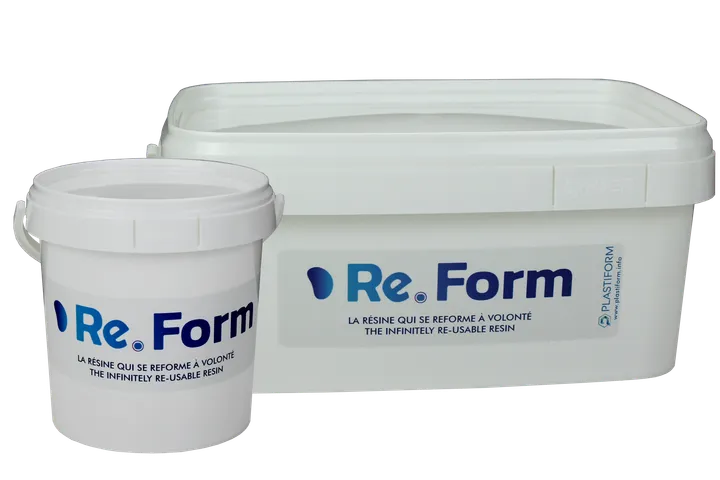
Re-Form is a thermoformable material that softens at 60°C and can be reused without limit. You can shape it by hand to hold a part, protect it in a vise, or build a reusable template for your Plastiform impressions.
What Re-Form Is
At room temperature, Re-Form is white, rigid, and unbreakable. From 60°C, it turns transparent and soft, so you can shape it by hand. Its color tells you its state. White means rigid, and transparent means soft.
Re-Form is not an impression material. You never measure it, because you always take measurements on the Plastiform impression.
Three Uses
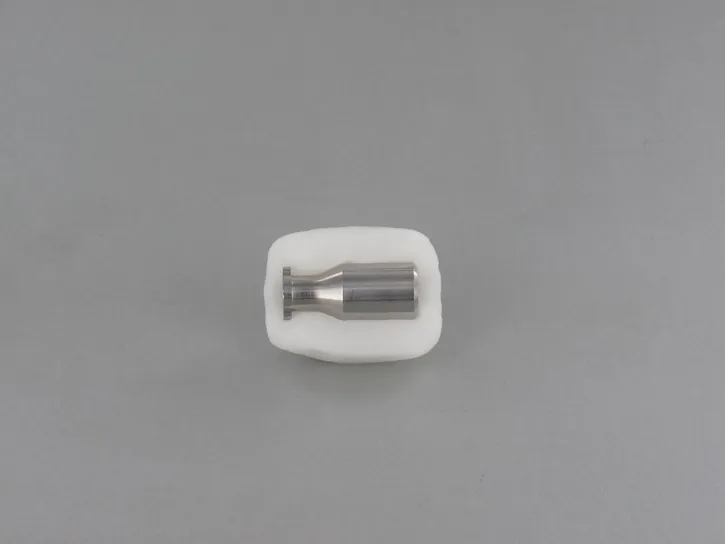
You can hold a part by shaping a custom support around it. To protect a part in a vise, put Re-Form between the part and the jaws to avoid marks. You can also build an impression template. This formwork clips on the part and bounds the cavity to fill with Plastiform.
How to Shape It
To make a support or jaw protection, soften the Re-Form in hot water before shaping it on the part.
- Put the Re-Form in a bath of hot water at about 60°C.
- Wait until it is entirely transparent. White areas mean the core is still rigid.
- Take it out and drain it with care, as the water and the Re-Form are hot.
- Shape it by hand, directly on the part.
- Let it cool. It turns white again as it stiffens.
- Check that the part is held firmly before using it in production.
If the shape is not right, put it back in hot water and start again with the same piece.
Build an Impression Template
When you need to bound the cavity to fill with Plastiform, shape a clip-on template directly on the part.
- Soften the Re-Form until it is entirely transparent.
- Shape it around the area to inspect, leaving a cavity for the impression product.
- Let it cool, then unclip the template. Check that it comes off and goes back on without forcing.
- Clip it back on the part to inspect.
- Inject Plastiform into the cavity. The template holds the product, even a Fluid one.
- Let the Plastiform polymerize, unclip the template, and remove the impression.
- Keep the template for the next inspection.
Why Use a Template
The template gives the same cavity at every inspection. The volume and the outer shape of the impression stay regular from one part to the next and from one operator to the next. It also saves time, because one Re-Form template replaces a Plastiform formwork that you would have to remake for each part.
