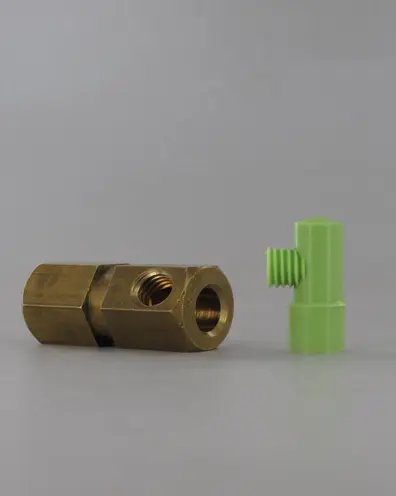
DM-50
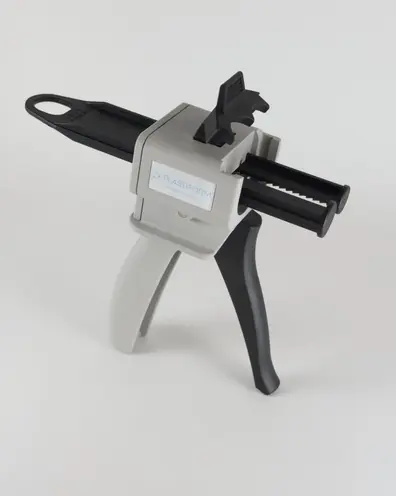
The DM-50 is a manual applicator gun designed for applying product in 50ml cartridges using a nozzle.
ReferencesDM-50
AC-001
Quantity
104,65 €
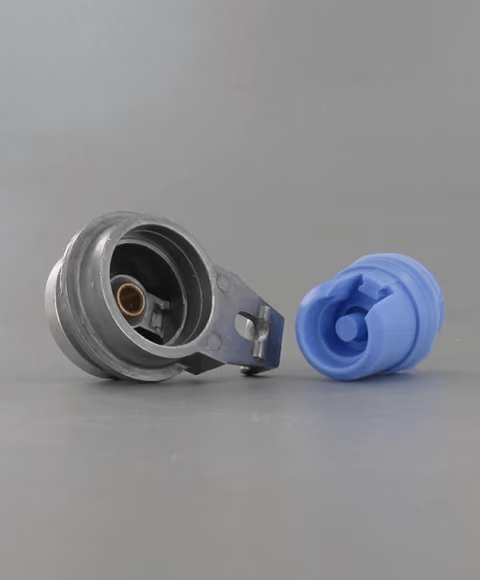
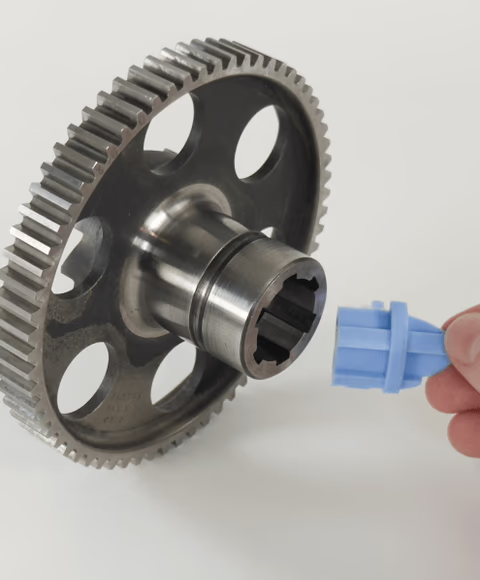
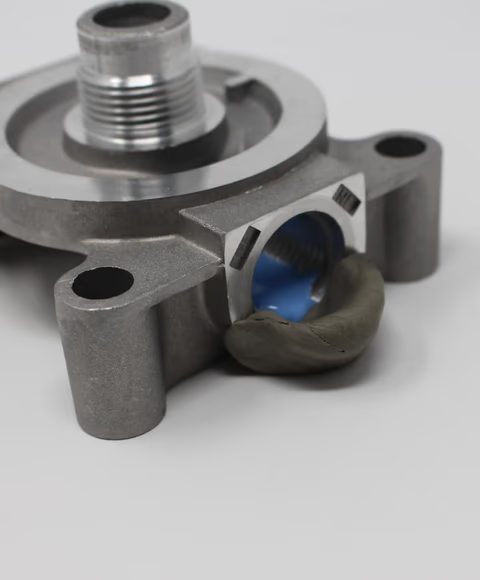

F50 stands as the most versatile product among the whole Plastiform range.
Renowned for its exceptional technical properties, F50 efficiently addresses a wide range of dimensional control challenges in various industries. Its remarkable fluidity and flexibility enable the F50 to seamlessly infiltrate and exit even the most intricate spaces.
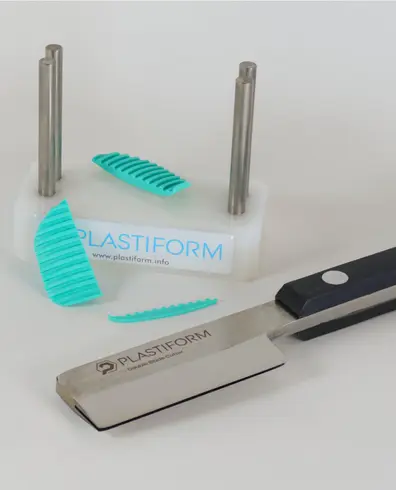
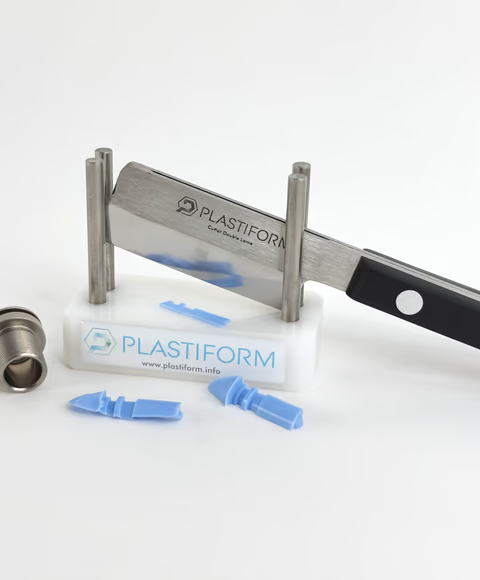
It is compatible with the Double Blade Cutter and its impressions can be cut, enhancing its user-friendliness when measuring the impression comes. The final form of the F50 settles into a Semi-Flexible state, with a hardness of 50 Shore A.
While it does not possess a high capacity for deformation, it tolerates a maximum Extraction Constraint of up to 10%. Therefore, it’s best suited for simpler mould shapes that require less complexity in unmoulding.
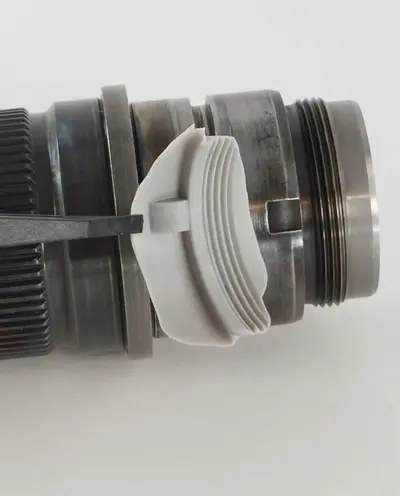
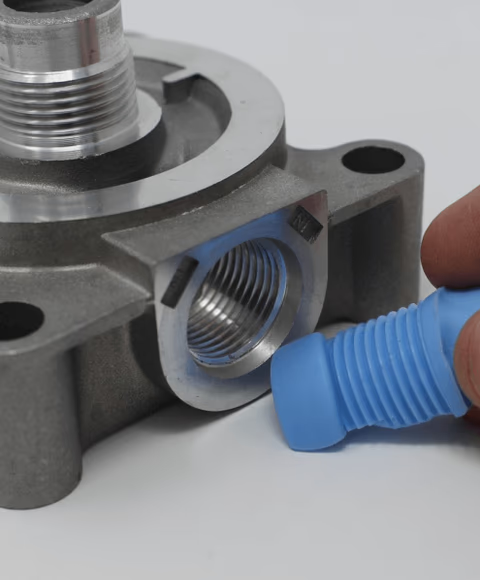
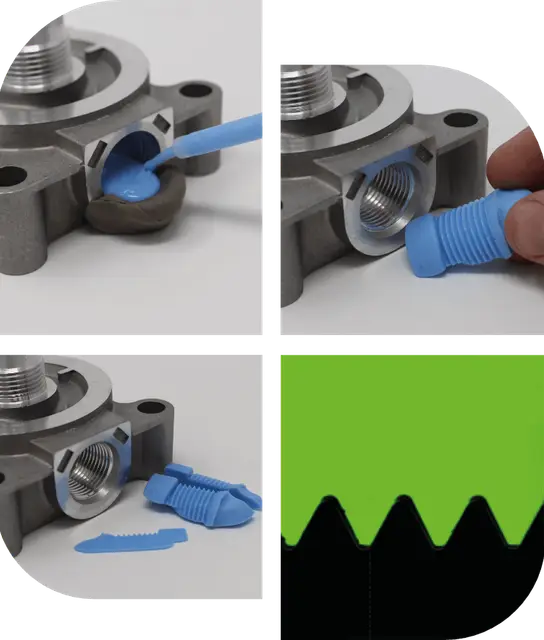
The F50 is specifically recommended for capturing impressions in straightforward or moderately complex internal structures. Its versatility extends to both total and partial impressions.
Furthermore, it can be used in crafting custom-made protective gear, caps, and shields for surface treatments.
The precision of the F50 impression is outstanding. It accurately replicates every minute detail of the surface — including shape, dimensions, texture, and overall condition — down to the micron level. This ensures that the final output is not only precise but also meets the highest standards of professional quality.
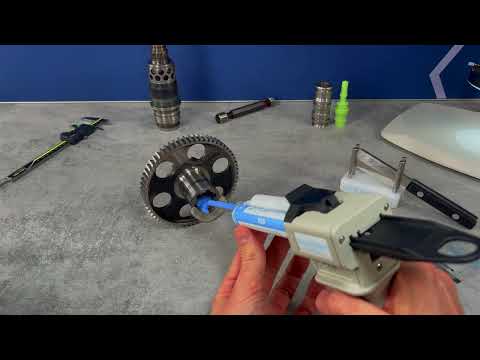
The F50 stands as one of the best products for accomplishing:
To achieve optimal results, users are advised to adhere to the guidelines provided in the accompanying instructions.
For best practice, it is recommended to pour the F50 slowly, using a nozzle, ensuring that the product flows thoroughly into every corner of the targeted area. This method is crucial to prevent the formation of air bubbles.
The guidelines mentioned above are equally applicable to all other fluid products within the Plastiform range, enhancing their versatility and effectiveness in similar applications.
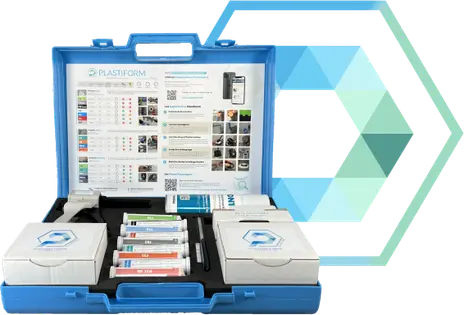
The case contains all required accessories to use Plastiform. It is the best way to try our solutions for the first time!


F50 must or can be used with the following accessories :

No. The double blade cutter can only cut semi-flexible impressions. You can check on the label and the technical sheet if the product you are interest in is usable with the Cutter.
After the mixing is complete, absorb any remaining product with paper and clean the mixer using white gas.
Plastiforms are highly precise, ensuring that once cured, they maintain perfect contact with the walls of the part, almost as if they are glued. To extract an impression: have a firm grip to pull energetically along the axis of the impression—twisting or unscrewing should be avoided. For this, it is essential to use demolding rings.
It is an industrial modeling clay that can be used as a replacement for conventional modeling clay. It is dedicated to industry, so it is permanently reusable and leaves no traces.
The "Working time" is the period during which a Plastiform can be altered after injection, maintaining its initial consistency. This means that the chemical reaction between the two components has not yet progressed to the point where the impression begins to harden.
The "curing time" is the period after which the impression can be removed from the part following its injection. This is when the impression has achieved approximately 80% of its final hardness, enabling its removal from the form to be replicated.
The "polymerization time" is the time required for the impression to reach its final hardness, such as 20 Shore A for F20, 50 Shore A for F50, etc. This indicates when the impression is fully usable, particularly for precise dimensional measurements.
Considered the F50 for your application but it doesn't exactly answers to your requirements? You may also find these alternative products helpful.
No reviews yet. Be the first to share your experience.
Loading available content...