Plastiform Blog

Master Quality Control: Discover Essential News, Data Analytics, Videos, and Beyond!

background vector
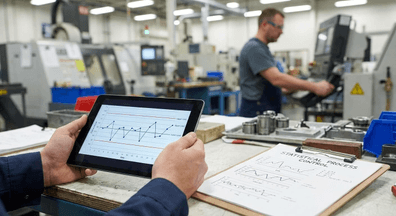
An engineer working in a smart factory with another one reading data of a Statistical Process Control setup.

Statistical Process Control (SPC) – Definition and Interest

Statistical Process Control (SPC) is a method that uses statistical techniques to monitor and control a manufacturing process. I used to assume that if you set a machine up perfectly, it should produce perfect parts indefinitely. If a dimension drifted, I would immediately tweak the settings to fix it. But… <a href="https://www.plastiform.info/en/blog/quality-assurance/statistical-process-control-spc-definition-and-interest/" class="read-more">Read More</a>

Read the article
Button Decoration iconButton Decoration icon
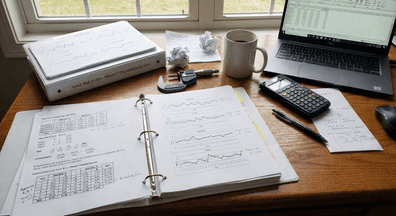
Results of a Gage R&R study in a desk

Gage R&R Study – How does it work ?

Gage R&R Studies measures the total gage variation as a percentage of process tolerance, helping determine if a measurement tool is suitable for inspecting parts.I remember the first time I rejected a perfectly good batch of parts. My digital caliper said they were out of spec, but my colleague measured… <a href="https://www.plastiform.info/en/blog/metrology/how-to-conduct-a-gage-r-and-r-study/" class="read-more">Read More</a>

Read the article
Button Decoration iconButton Decoration icon
An operator in aerospace performing an Eddy Current test

Eddy Current Inspections – How To Guide

Eddy currents are circular electric currents that naturally occur in conductive materials as a response to variations in magnetic flux, creating their own opposing magnetic fields.This technique relies on the electromagnetic induction principle. It is the same physics that wirelessly charges your electric toothbrush or iPhone, but repurposed to hunt… <a href="https://www.plastiform.info/en/blog/metrology/eddy-current-inspections-how-to-guide/" class="read-more">Read More</a>

Read the article
Button Decoration iconButton Decoration icon
ornemental strips

SIGN UP FOR THE NEWSLETTER

Stay informed with the latest industry insights and updates, delivered directly to your email.

newsletter illustration
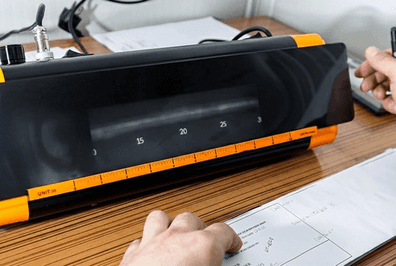
PAUT test performed in a teaching environment.

How does Phased Array Ultrasonic Testing (PAUT) Works?

Phased Array Ultrasonic Testing (PAUT) is an advanced non destructive testing method. It lets you inspect materials for flaws using a group of small ultrasonic probes, with no need to damage the component. You don’t have to move the probe like in conventional single probe tests. It… <a href="https://www.plastiform.info/en/blog/quality-assurance/how-does-phased-array-ultrasonic-testing-paut-works/" class="read-more">Read More</a>

Read the article

Button Decoration iconButton Decoration icon
Micrometer on a table for thickness measurement operation

Thickness Measurement: Basic to Advanced Methods and Tools

Thickness measurement is determining the distance between two parallel surfaces of an object. This applies to both the main body of a material and any thin layers applied to its surface.This dimensional inspection affects structural integrity, corrosion protection, product quality, and regulatory compliance.The industry relies on standardized procedures for consistent… <a href="https://www.plastiform.info/en/blog/metrology/thickness-measurement-basic-to-advanced-methods-and-tools/" class="read-more">Read More</a>

Read the article
Button Decoration iconButton Decoration icon
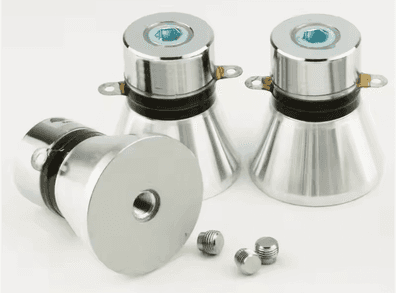
Ultrasonic Piezoelectric Transductor

What is a Piezoelectric Transducer? What is it used for?

A Piezoelectric Transducer is a device that converts mechanical energy, like pressure, into an electrical signal and can also perform the reverse, turning an electrical signal into mechanical motion.The latest mechanism is used for exemple in Ultrasonic Testing.The name comes from the Greek word “piezo”, which means… <a href="https://www.plastiform.info/en/blog/engineering/what-is-a-piezoelectric-transducer-what-is-it-used-for/" class="read-more">Read More</a>

Read the article

Button Decoration iconButton Decoration icon
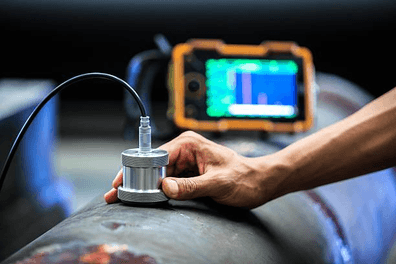
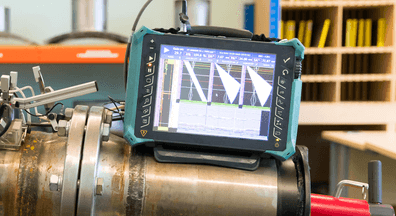
Ultrasonic test performed on a pipeline

What is Ultrasonic Testing ? How to use it ?

Ultrasonic Testing is a non-destructive method using high frequency sound waves to inspect the internal structure of a material without damaging it.It operates like a medical ultrasound for industrial components, sending sound pulses into a part and analyzing the returning echoes to find flaws or… <a href="https://www.plastiform.info/en/blog/quality-assurance/what-is-ultrasonic-testing-and-how-it-works/" class="read-more">Read More</a>

Read the article
Button Decoration iconButton Decoration icon
Welding Beads made by an engineer

Welding Beads – Definition & Different Types

Welding Beads are lines of welded metals created by introducing filler metal into the joint between two metal pieces. These beads create strong bonds that hold the pieces together. As an engineer, you probably had to deal with weld bead defects created by wrong torch techniques.In this article, we will… <a href="https://www.plastiform.info/en/blog/engineering/welding-beads-definition-different-types/" class="read-more">Read More</a>

Read the article
Button Decoration iconButton Decoration icon
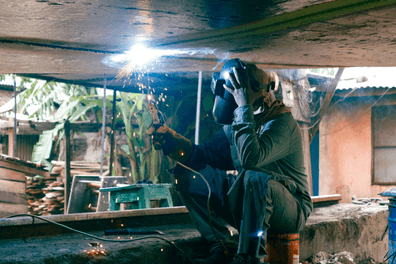
An operator doing welds on steel

Weld Quality Control – How to Guide

Welding quality control is a set of processes that ensure weld integrity and compliance with standards. These steps help you prevent defects and guarantee safe, reliable joints in every project.The welding quality detection market reached USD 1.2 billion in 2024 and will grow to USD 2.5 billion by 2033 at… <a href="https://www.plastiform.info/en/blog/quality-assurance/welding-quality-control-how-to-guide/" class="read-more">Read More</a>

Read the article

Button Decoration iconButton Decoration icon
A pipeline used after hydrostatic testing confirmed eligibility

Hydrostatic Testing – 2025 Complete Overview

Hydrostatic testing is a non-destructive quality control method used in engineering to verify the structural integrity and leak-tightness of pressure vessels, pipelines, and other systems.It involves filling the component with an incompressible liquid (usually water) and applying a controlled internal pressure around 1.25 to 1.5 times the… <a href="https://www.plastiform.info/en/blog/quality-assurance/hydrostatic-testing-complete-overview/" class="read-more">Read More</a>

Read the article
Button Decoration iconButton Decoration icon
Gas pipeline during a pressure test procedure

What is Pneumatic Testing ? How Does it Work?

Pneumatic testing is a method used to check if a pressure system like a pipe, tank, can safely withstand the expected pressure.Instead of filling it with water, the system is pressurized with air or another safe gas. This helps reveal whether it is strong enough, free from leaks, and safe… <a href="https://www.plastiform.info/en/blog/quality-assurance/what-is-pneumatic-testing-how-does-it-work/" class="read-more">Read More</a>

Read the article

Button Decoration iconButton Decoration icon
Metric ISO Bolts

ISO Thread / Metric Screw Threads – Complete Guide

The ISO metric screw thread is the most commonly used type of threads in general purpose fastening.It uses a simple naming system, a clear geometry, and a shared set of standards that make parts fit together predictably.ISO metric threads are similar to the Unified Thread Standard (UTS) threads mostly used… <a href="https://www.plastiform.info/en/blog/engineering/iso-metric-screw-threads-complete-guide/" class="read-more">Read More</a>

Read the article
Button Decoration iconButton Decoration icon